The Weed Board
The weeds you’ll actually see in cool-season lawns across the Northeast. Swipe the photos to find the one that looks like yours. Tap, or keep swiping, for the fix.
Leafy weeds and flowers
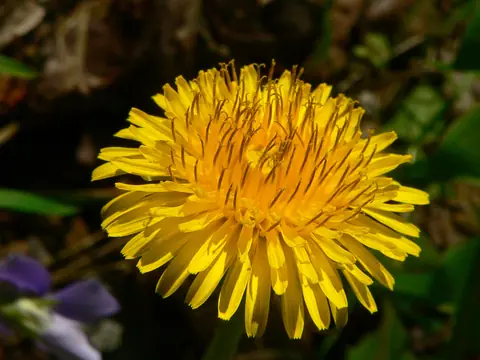
Flower · 1/3 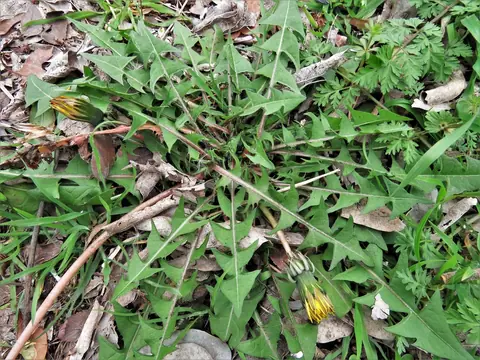
Leaves · 2/3 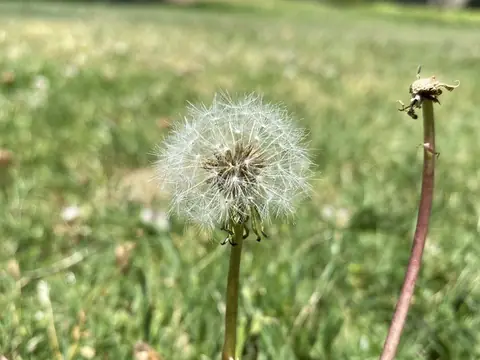
Seed head · 3/3 Dandelion
Yellow puffball flower, jagged leaves in a flat rosette.
Dandelion
When: Spring and fall
Easy fix: Pull it after a rain, root and all. A cheap weed-puller tool makes it oddly satisfying.
Mike’s fix: Spot-spray a lawn weed killer for broadleaf weeds in fall. Fall spraying gets the root, so it doesn’t come back.
Or just let it be: Bees love the early flowers. A few won’t ruin anything.
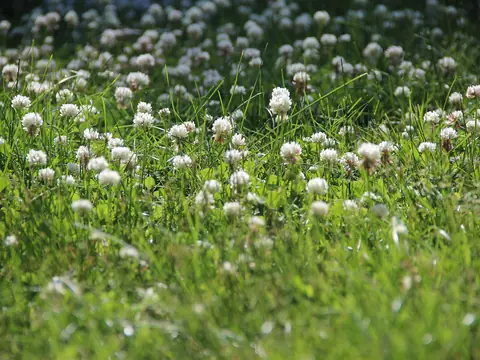
In the lawn · 1/3 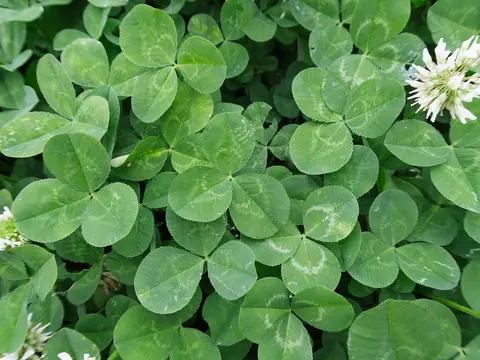
Leaves · 2/3 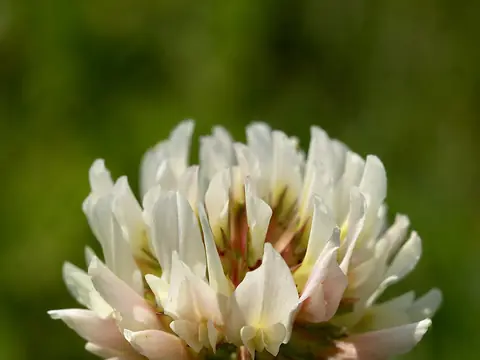
Flower · 3/3 White clover
Three round leaflets, little white pom-pom flowers.
White clover
When: Late spring through summer
Easy fix: Feed the lawn in fall. Clover moves in where grass is hungry for nitrogen.
Mike’s fix: A broadleaf weed killer works, but it takes a couple of rounds. Thick, well-fed grass is the long-term fix.
Or just let it be: Honestly, lots of people keep it now. It stays green and the bees are big fans.
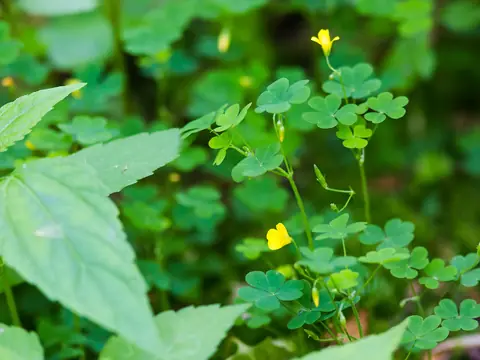
Flower and leaves · 1/3 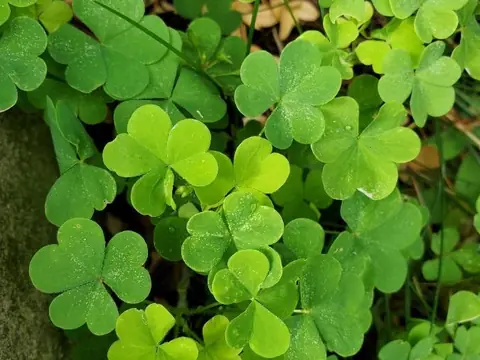
Heart-shaped leaves · 2/3 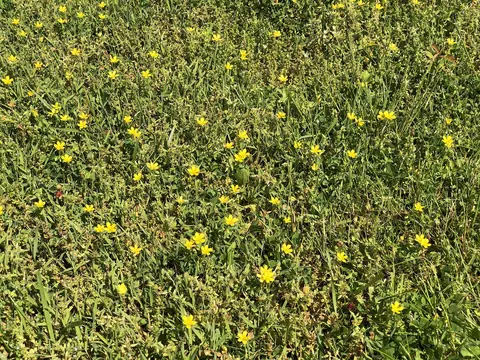
In the lawn · 3/3 Yellow wood sorrel (oxalis)
Looks like clover, but the leaves are heart-shaped and the flowers are small and yellow.
Yellow wood sorrel (oxalis)
When: Late spring through fall
Easy fix: Pull it while it’s small, root and all, before it flowers. The seed pods pop and fling seeds when they’re ripe.
Mike’s fix: Spot-spray a broadleaf weed killer that lists oxalis on the label. It usually takes two rounds. Then thicken the lawn in fall.
Or just let it be: It’s small and blends in. Mow tall and most of it hides.
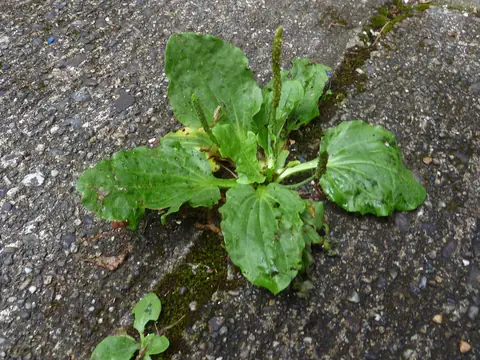
Leaves · 1/3 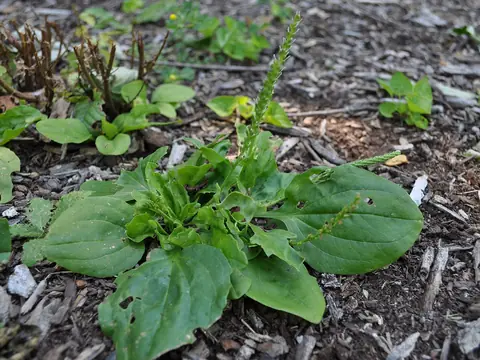
Whole plant · 2/3 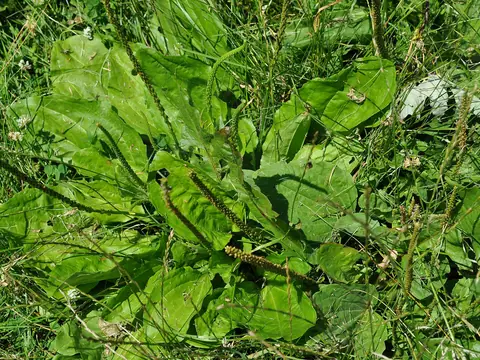
In the lawn · 3/3 Broadleaf plantain
Big oval leaves with ribbed veins, flat to the ground. Skinny seed spikes.
Broadleaf plantain
When: Summer
Easy fix: Pop it out with a weed puller. It loves packed-down soil, like near paths.
Mike’s fix: Broadleaf weed killer takes it out easily. Aerate high-traffic spots so it stops coming back.
Or just let it be: It’s a sign your soil is compacted. Fix that and it fades out.
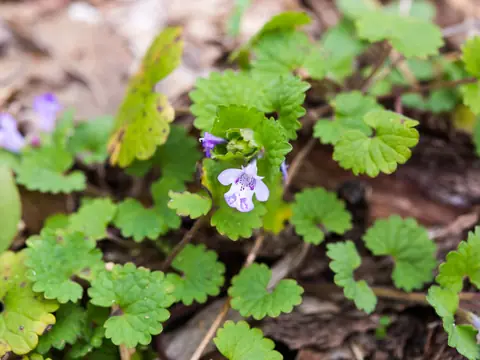
Leaves and flowers · 1/2 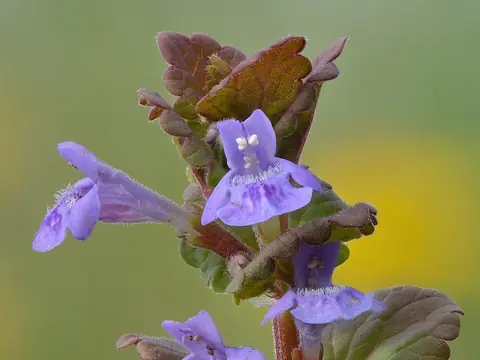
Flower · 2/2 Creeping Charlie
Round, scalloped leaves on creeping vines. Tiny purple flowers. Smells minty when mowed.
Creeping Charlie
When: Spring and fall, loves shade
Easy fix: Pull the runners by hand in moist soil. Get as much vine as you can.
Mike’s fix: It’s tough. Use a weed killer labeled for ground ivy in fall, and plan on two treatments.
Or just let it be: In deep shade where grass struggles anyway, it’s a decent ground cover.
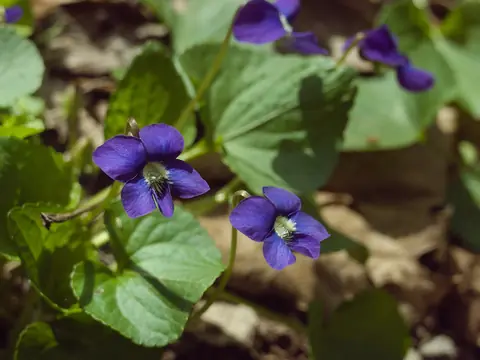
Flowers and leaves · 1/2 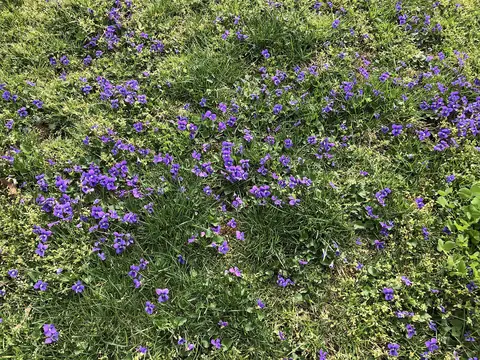
In the lawn · 2/2 Wild violet
Heart-shaped leaves, little purple flowers in spring.
Wild violet
When: Spring, likes shade
Easy fix: Dig it out, roots and all. Small clumps are easy.
Mike’s fix: One of the hardest to kill. Spot-treat in fall with a product labeled for violets and be patient.
Or just let it be: They’re pretty in spring. In a shady corner, letting them be is a fair call.
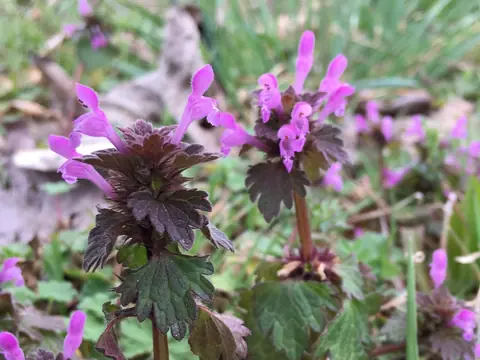
Purple deadnettle · 1/3 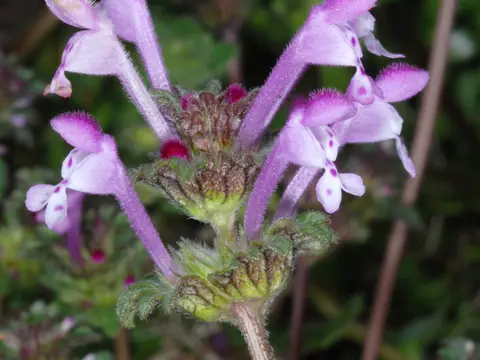
Henbit · 2/3 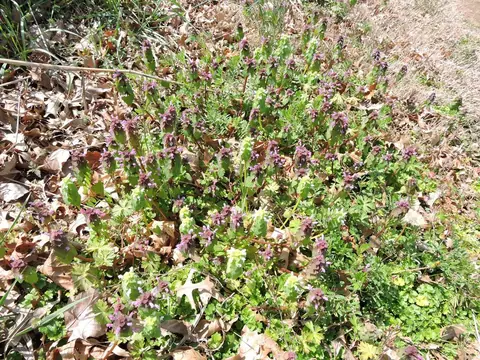
Spring patch · 3/3 Purple deadnettle & henbit
Square stems, fuzzy scalloped leaves, little pink-purple flowers. Purple patches in early spring.
Purple deadnettle & henbit
When: Early spring (sprouts in fall)
Easy fix: Do nothing. It’s a winter annual and dies on its own when it gets hot in late spring.
Mike’s fix: If it’s a lot, spray a broadleaf weed killer in fall while it’s young, then seed the thin spots it was hiding in.
Or just let it be: Early bees love it, and it’s gone by June. This is the easiest one on the board to let be.
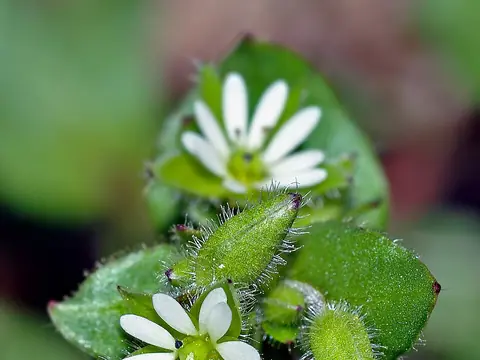
Flowers · 1/3 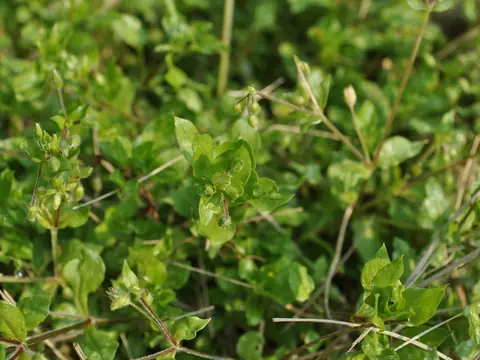
Mat · 2/3 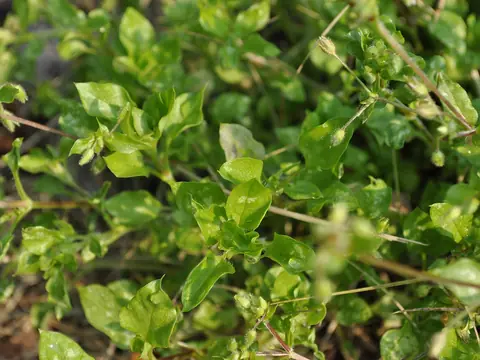
Leaves · 3/3 Chickweed
Tiny pointed leaves in mats, little white star-shaped flowers.
Chickweed
When: Cool weather, early spring
Easy fix: Rake it up and pull the mats. It lets go easily.
Mike’s fix: Broadleaf weed killer in fall or very early spring. Thicken the lawn with fall seeding.
Or just let it be: It fades once it gets hot. Annoying, not dangerous.
Grassy weeds
They look like grass, but they’re not your grass.
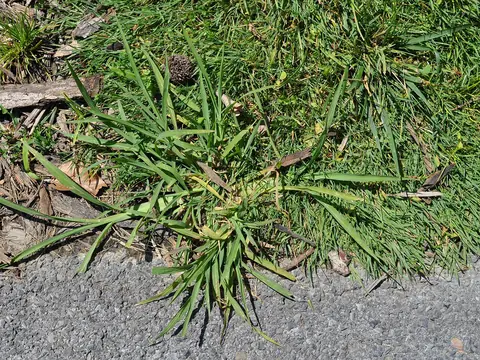
Clump · 1/3 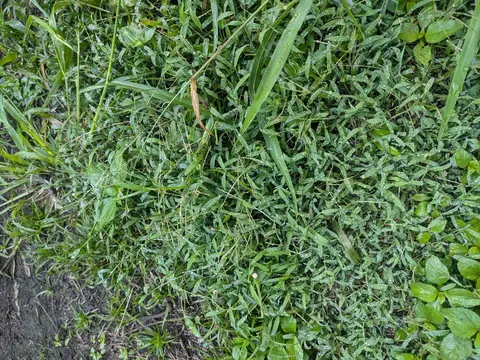
In the lawn · 2/3 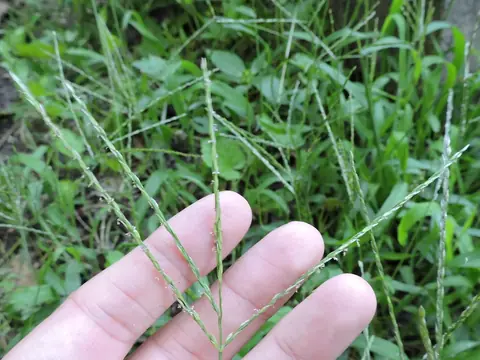
Seed heads · 3/3 Crabgrass
Wide, pale-green blades that sprawl out flat like a crab. Shows up in July.
Crabgrass
When: Sprouts in spring, ugly by July
Easy fix: Mow tall. Shaded soil keeps crabgrass seeds from sprouting at all.
Mike’s fix: Crabgrass preventer in April when the forsythia blooms. If you missed it, a crabgrass killer can knock out young plants in early summer.
Or just let it be: It dies at the first frost. Then it drops seeds for next year. So, maybe don’t chill.
In the lawn · 1/3 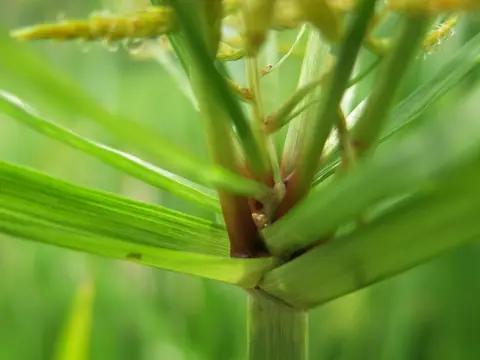
Leaves in threes · 2/3 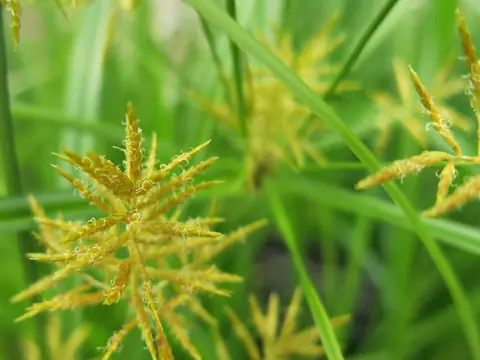
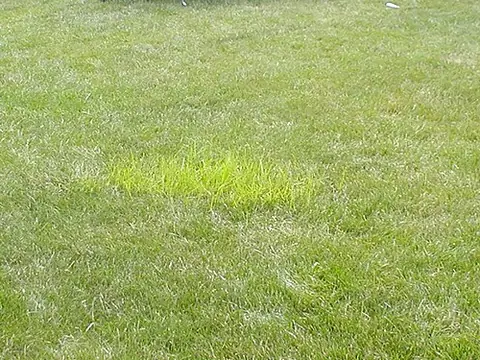
Seed head · 3/3 Yellow nutsedge
Shiny, bright yellow-green, grows faster than your grass. Triangle-shaped stem.
Yellow nutsedge
When: Summer, in wet spots
Easy fix: Don’t pull it. It leaves little nutlets behind that grow more. Fix soggy spots instead.
Mike’s fix: Use a product made for nutsedge (look for halosulfuron on the label). Regular weed killers don’t touch it.
Or just let it be: It sticks out a day after you mow. Not really chill-able.
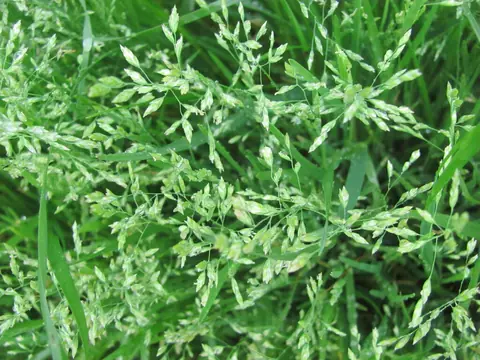
White seed heads · 1/3 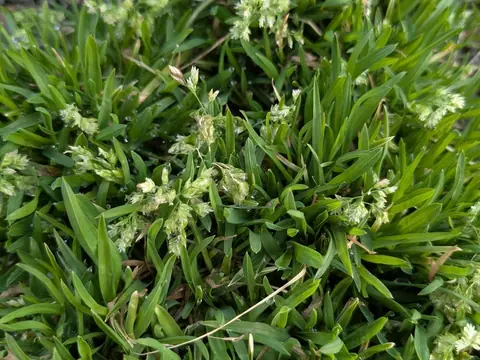
Clump · 2/3 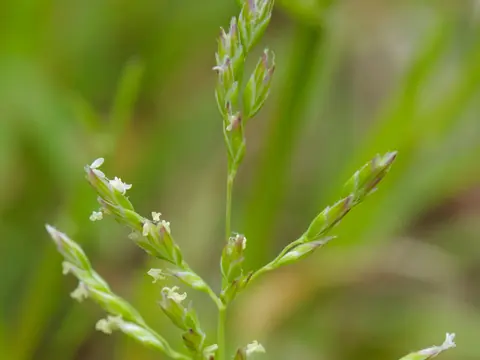
Seed head · 3/3 Annual bluegrass
Light green clumps covered in little white seed heads in spring, even when you mow short.
Annual bluegrass
When: Spring (sprouts in fall)
Easy fix: Mow higher and water less often. It has short roots and loves short, wet lawns.
Mike’s fix: A preventer in late summer stops it from sprouting in fall. But it also stops grass seed, so pick one: seed that fall or prevent.
Or just let it be: A lot of it dies out in the summer heat on its own. Seed those thin spots in fall.
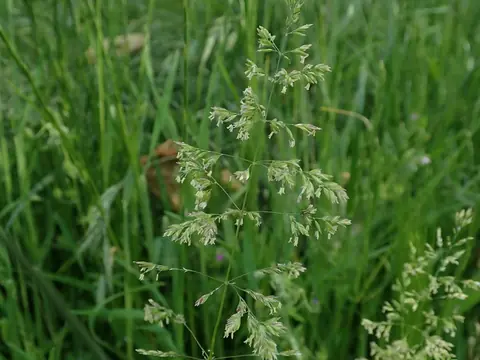
Patch · 1/2 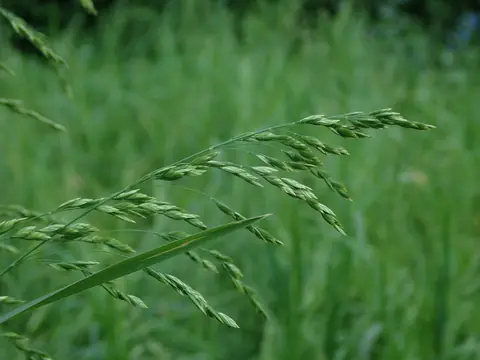
Seed head · 2/2 Rough bluegrass
Lime green, shiny patches that lie flat and feel slick. Turns brown in summer heat, comes back in fall.
Rough bluegrass
When: Lush in spring and fall, brown in summer
Easy fix: Water less. It loves wet, shady spots. Rake small patches out hard and reseed.
Mike’s fix: There’s no easy spray for it at home. Kill the patch in late summer and reseed with good grass. Check your seed bag too: it sneaks into some cheap shade mixes.
Or just let it be: In a wet, shady corner it may just keep winning. Make peace or fix the drainage.
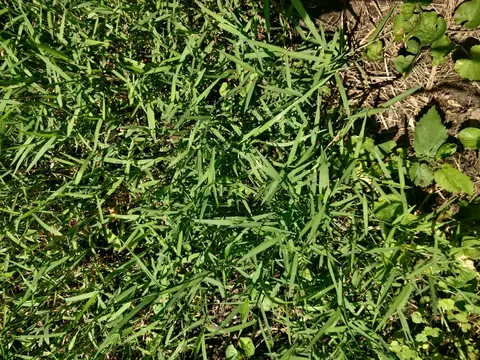
In the lawn · 1/3 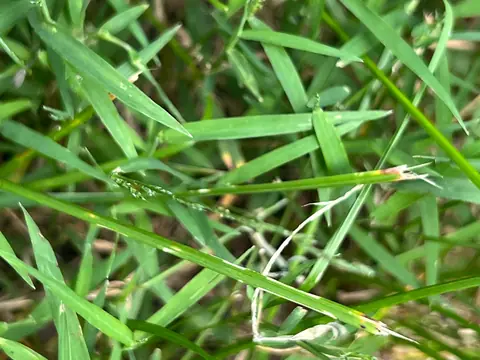
Up close · 2/3 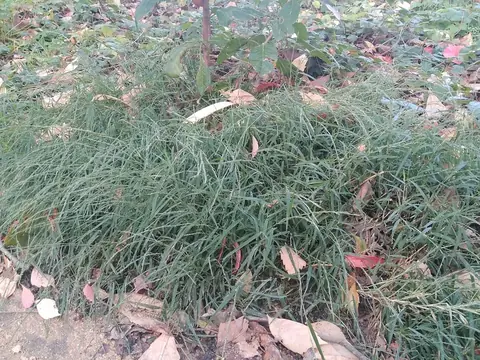
Wiry clump · 3/3 Nimblewill
Thin, wiry, gray-green grass in patches. Stays tan long after the rest of the lawn greens up in spring.
Nimblewill
When: Green in summer, tan from fall to late spring
Easy fix: Small patches: dig them out and reseed in fall.
Mike’s fix: Use a lawn product with mesotrione on the label. It takes a few sprays a couple of weeks apart. Then seed the bare spots.
Or just let it be: Some people just live with the tan patches. It greens up by early summer.
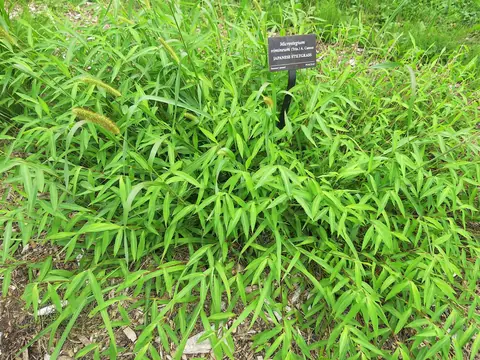
Patch · 1/3 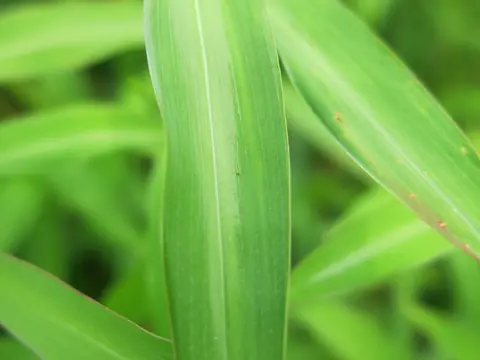
Leaf stripe · 2/3 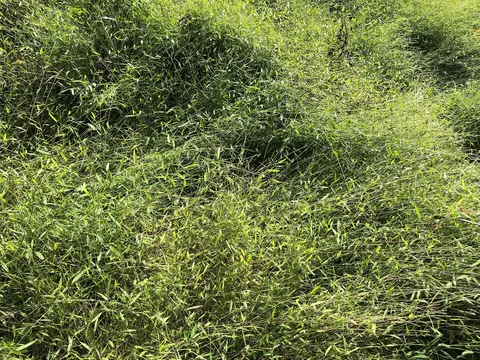
Taking over an edge · 3/3 Japanese stiltgrass
Pale green, bamboo-looking leaves with a shiny stripe off to one side. Takes over shady edges.
Japanese stiltgrass
When: Late summer into fall (sprouts in spring)
Easy fix: Pull it before it seeds in September. The roots are shallow, so it comes right up.
Mike’s fix: It sprouts from seed every spring, so a crabgrass preventer stops it too. Put it down on the edges where it showed up, a little earlier than you would for crabgrass.
Or just let it be: Not chill-able. Every plant drops piles of seed, and it spreads into the woods.
Moss
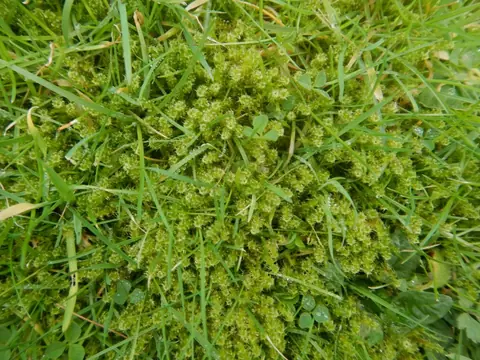
In the lawn · 1/3 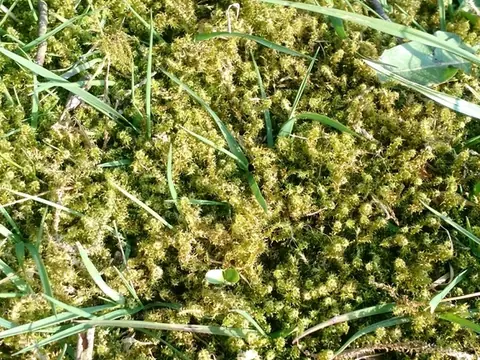
Moss taking over · 2/3 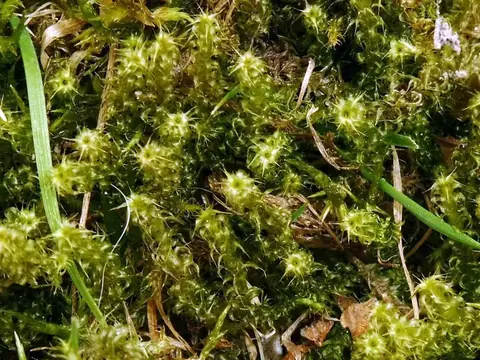
Up close · 3/3 Moss
Soft green carpet in thin, shady spots. Not really a weed, more a sign the grass is struggling there.
Moss
When: All year, worst in spring and fall
Easy fix: Rake it out, then figure out why it’s there: usually shade, soggy soil, or acidic soil.
Mike’s fix: Get a soil test. If the pH is low, add lime. Trim branches to let in light, then seed with a shade mix in fall.
Or just let it be: In deep shade, moss might just win. Lots of people call it a moss garden and stop mowing it.
Not that kind of weed
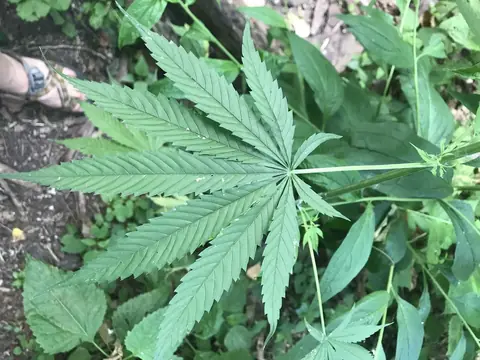
The famous leaf · 1/2 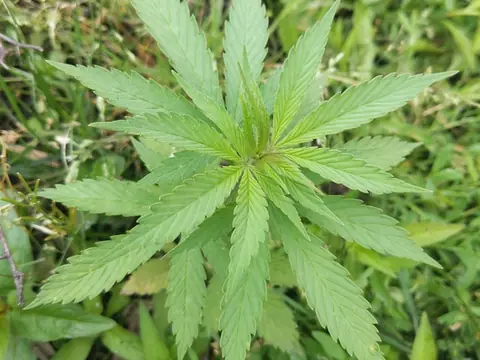
From above · 2/2 Weed (the other kind)
Jagged leaves with five to seven skinny fingers. You know the one. It’s on half the T-shirts at the county fair.
Weed (the other kind)
When: Summer, usually right under the bird feeder
Easy fix: Pull it, roots and all. Birdseed can have hemp seed in it, and every so often one sprouts. Your bird feeder is not running a side business.
Mike’s fix: Mow it at 3.5 inches like everything else. Nothing survives the stripes.
Or just let it be: It’s legal for adults in New York, but the front lawn is a bold place for it. Your neighbors will have questions.
Before you spray anything: thick, tall grass is the best weed killer there is. Most weeds are just filling in where grass is thin. Always follow the product label.
More help: when to put down crabgrass preventer,pre-emergent vs. post-emergent,getting rid of moss,kid- and pet-safe weed control andfall: kill weeds or plant seed first?
Photo Credits
All photos are used under free licenses, cropped and resized.
- Dandelion: flower by Greg Hume (Wikimedia Commons), CC BY-SA 3.0; leaves by Annika Lindqvist (iNaturalist), CC BY 4.0; seed head by iNaturalist user (iNaturalist), CC0
- White clover: in the lawn by NY State IPM Program at Cornell University (Wikimedia Commons), CC BY 2.0; leaves by Macleay Grass Man (Wikimedia Commons), CC BY 2.0; flower by Hans Hillewaert (Wikimedia Commons), CC BY-SA 3.0
- Yellow wood sorrel (oxalis): flower and leaves by Melissa McMasters (Wikimedia Commons), CC BY 2.0; heart-shaped leaves by j Lowry (Wikimedia Commons), CC BY-SA 4.0; in the lawn by Famartin (Wikimedia Commons), CC BY-SA 4.0
- Broadleaf plantain: leaves by Jesse Taylor (Wikimedia Commons), CC BY-SA 3.0; whole plant by NY State IPM Program at Cornell University (Wikimedia Commons), CC BY 2.0; in the lawn by NY State IPM Program at Cornell University (Wikimedia Commons), CC BY 2.0
- Creeping Charlie: leaves and flowers by Melissa McMasters (Wikimedia Commons), CC BY 2.0; flower by Ivar Leidus (Wikimedia Commons), CC BY-SA 4.0
- Wild violet: flowers and leaves by Cbaile19 (Wikimedia Commons), CC0; in the lawn by Famartin (Wikimedia Commons), CC BY-SA 4.0
- Purple deadnettle & henbit: purple deadnettle by Harry Podschwit (iNaturalist), CC BY 4.0; henbit by Douglas Goldman (iNaturalist), CC BY-SA 4.0; spring patch by cwwood (iNaturalist), CC BY-SA 4.0
- Chickweed: flowers by André Karwath (Wikimedia Commons), CC BY-SA 2.5; mat by NY State IPM Program at Cornell University (Wikimedia Commons), CC BY 2.0; leaves by NY State IPM Program at Cornell University (Wikimedia Commons), CC BY 2.0
- Crabgrass: clump by NY State IPM Program at Cornell University (Wikimedia Commons), CC BY 2.0; in the lawn by Kevin Faccenda (iNaturalist), CC BY 4.0; seed heads by Sam Kieschnick (iNaturalist), CC BY 4.0
- Yellow nutsedge: in the lawn by SB_Johnny (Wikimedia Commons), Public domain; leaves in threes by NY State IPM Program at Cornell University (Wikimedia Commons), CC BY 2.0; seed head by NY State IPM Program at Cornell University (Wikimedia Commons), CC BY 2.0
- Annual bluegrass: white seed heads by zebedeugalinha (iNaturalist), CC BY 4.0; clump by iNaturalist user (iNaturalist), CC0; seed head by Cheng-Tao Lin (iNaturalist), CC BY 4.0
- Rough bluegrass: patch by Daniel Cahen (iNaturalist), CC BY 4.0; seed head by Daniel Cahen (iNaturalist), CC BY 4.0
- Nimblewill: in the lawn by Jeff Hansen (iNaturalist), CC BY 4.0; up close by iNaturalist user (iNaturalist), CC0; wiry clump by Josep Gesti (iNaturalist), CC BY-SA 4.0
- Japanese stiltgrass: patch by NY State IPM Program at Cornell University (Wikimedia Commons), CC BY 2.0; leaf stripe by NY State IPM Program at Cornell University (Wikimedia Commons), CC BY 2.0; taking over an edge by Famartin (Wikimedia Commons), CC BY-SA 4.0
- Moss: in the lawn by iNaturalist user (iNaturalist), CC0; moss taking over by Svend Hansen (iNaturalist), CC BY 4.0; up close by Barry Walter (iNaturalist), CC BY 4.0
- Weed (the other kind): the famous leaf by iNaturalist user (iNaturalist), CC0; from above by Liam Gerry (iNaturalist), CC BY 4.0


